
The Step
Per kWh$0.02
Secured240 MW
PPA15 YR
Kazakhstan, Uzbekistan — stranded hydro and coal, a post-Soviet grid priced for industrial buyers that never arrived.
Equator is the only platform built across the full stack of the new digital economy — spanning money through stablecoin, movement through OTC, cards, and wallets, power through energy infrastructure, compute through GPU clusters, and data through global labor and intelligence networks. Together they converge on one purpose: a network where autonomous agents pay and settle across the world without ever noticing the rails beneath them.


The question is no longer whether the new world arrives— it is who builds the infrastructure beneath it, and where that infrastructure is laid first.
Bloodstream: SWIFT. Nerves: Visa and Mastercard. Heart: the US dollar. Built in 1973, designed for a world of faxes, correspondent banks, and three-day clearings. It did its work. That work is finishing.
A billion AI agents acting autonomously. Machines transacting with machines, twenty-four hours a day. Compute and data become the new oil. The rails it runs on must clear in sub-seconds — not sub-days.
Kazakhstan, Uzbekistan — stranded hydro and coal, a post-Soviet grid priced for industrial buyers that never arrived.

Georgia, Armenia — European regulatory ambition, Caucasus geography, and the linguistic diversity frontier models still cannot synthesize.

Georgia, Armenia — European regulatory ambition, Caucasus geography, and the linguistic diversity frontier models still cannot synthesize.
Built for the G7, the existing infrastructure leaves emerging markets with slow rails, high fees, and no access to modern capital. Equator doesn't patch these systems — it replaces them.
Beneath the payment layer, a second system runs — connecting stranded power to global AI demand, and connecting linguistic labor to the models that need it. These are not extensions of the payment products. They are an entirely separate infrastructure layer, built on the same settlement substrate.
Power Purchase Agreement
Almaty, Georgia · 10–20yr fixed
AI Training Capacity
H100 clusters · co-located
Compute Supply Agreement
fixed-price H100-hours · annual
AI Labs · USDC payment
SF · London · Seoul
Local Settlement
USDC → KZT-e → plant wages
LOOP CLOSED · 83% energy cost reduction · revenue recycles into local stablecoin liquidity
Kazakhstan · PPA
$0.02per kWh · locked for 10–20 years
US · Data Center
$0.12per kWh · AI compute power
Emerging Markets
$2-5per hour · local labeling wages
US · Data Labor
$15-25per hour · Western labeling
Cross-border value movement shouldn’t be slow, expensive, and opaque. Yet across emerging markets, settlement takes days, costs compound at every handoff, and compliance remains painfully manual. One infrastructure layer for the next global financial system.

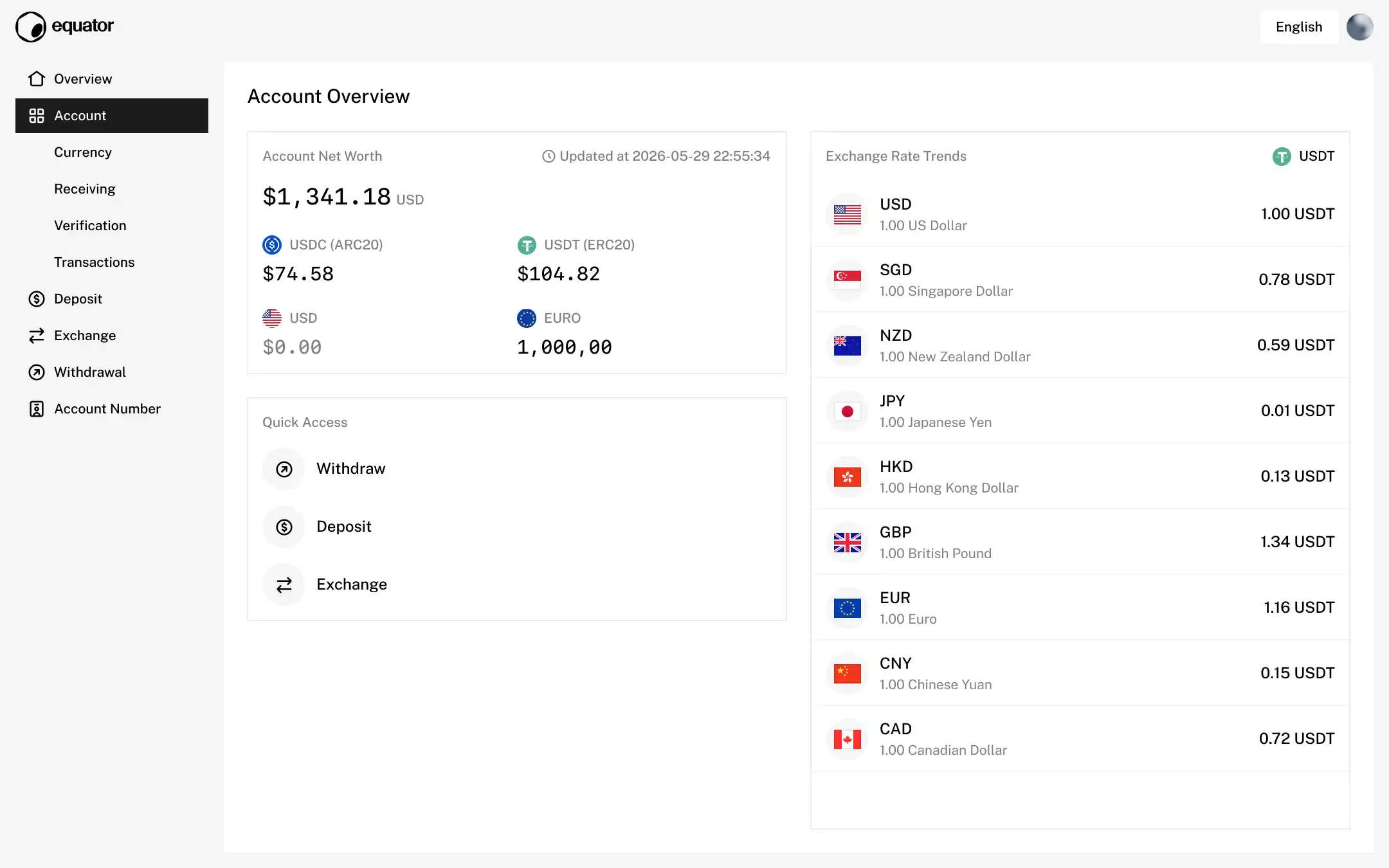
The entry point for real trade flows
High-volume bilateral stablecoin trading for enterprises, miners, and cross- border traders. No slippage. No order book. Direct counterparty settlement with system-level escrow — Fully regulated, audit-able, and compliant.

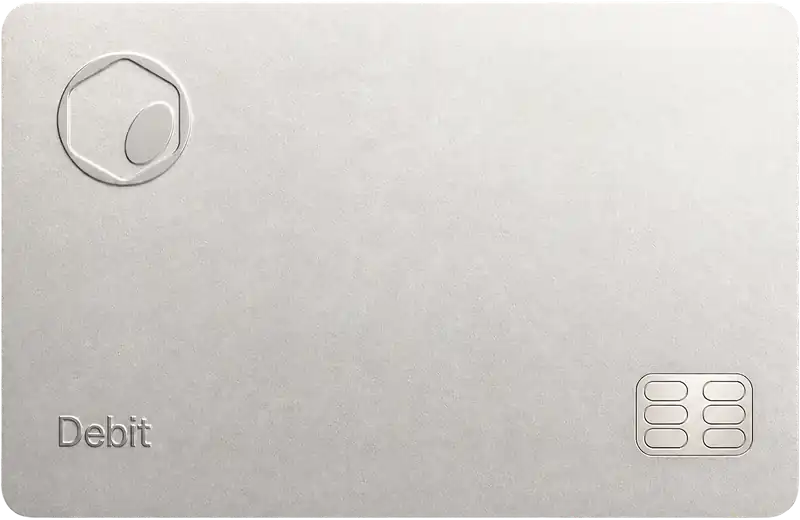
Crypto treasury, real-world commerce
A card that spends stablecoin anywhere Visa or Mastercard is accepted. No extra conversion. No new account. No retail FX markup. Your OTC balance moves to your card in one click, and settles against the same Equator engine that cleared it. The rate you traded at is the rate you spend at.

A digital extension of local monetary sovereignty
Sovereign-compliant stablecoins — KZT-e, GEL-e, AMD-e, KES-e — issued under government MOUs, paired with on/off-ramp exchanges for instant fiat conversion. Not a dollar replacement. A real-time layer beneath local currencies.

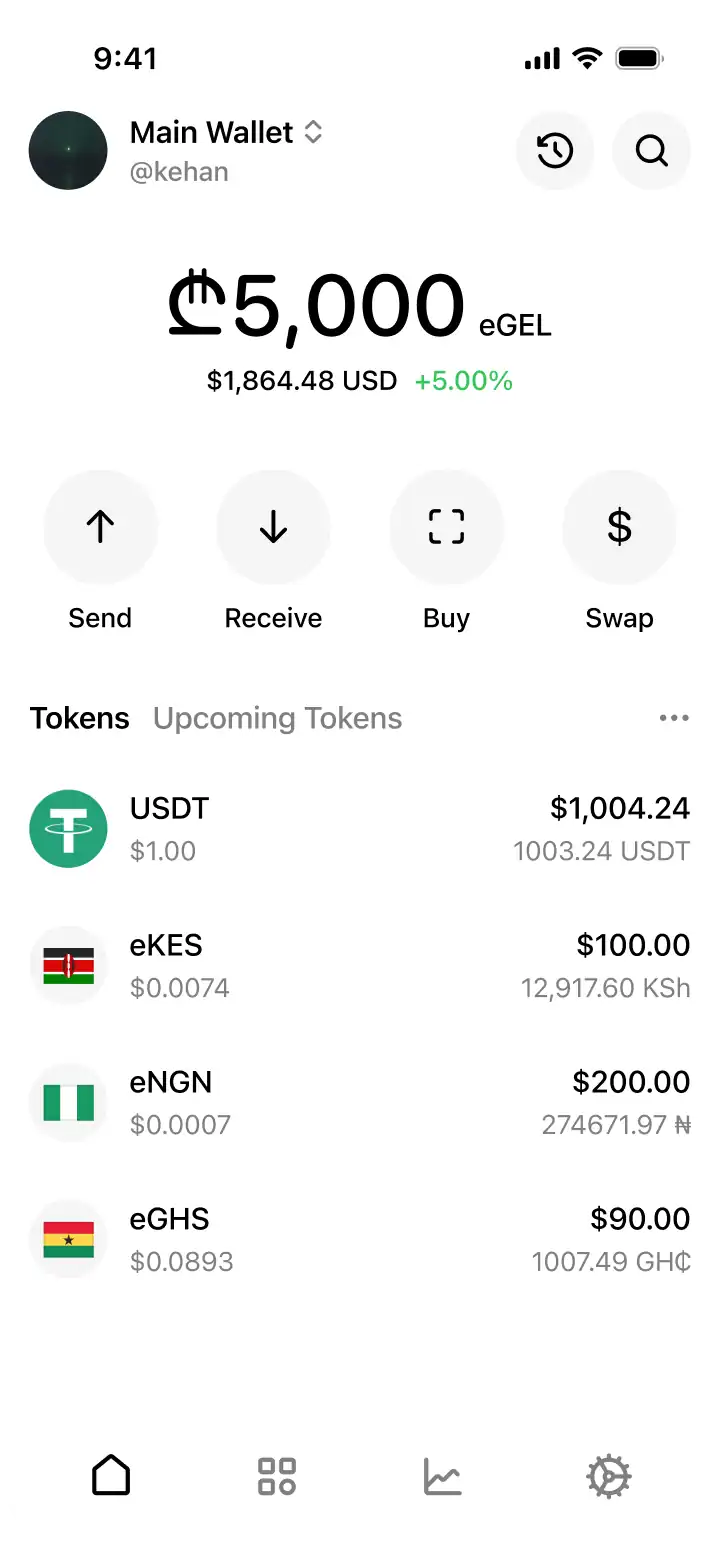
Built for the next billion users, not crypto natives
For users: Send, spend, and save stablecoin. Earn yield versus 0% bank interest or outright currency devaluation. Onboard in 90 seconds with a phone number and PIN. For merchants: Accept QR-code payments. Receive stablecoin instantly. Settle to fiat same-day. No hardware. No chargebacks. 0.5% fee versus the 3% card networks charge. First $5,000 processed fee-free.
A self-reinforcing ecosystem bridging institutional liquidity and global commerce.
By utilizing institutional-grade OTC desks and stablecoin cards, the system replaces traditional banking delays with 0.4-second instant settlement. This attracts global traders and builds a deep, high-velocity liquidity reserve that powers the entire ecosystem.
OTC desks and stablecoin cards are not the endgame — they are bridges. As native stablecoin adoption deepens, the bridges dissolve. What remains is the rail beneath them.
2024 → 2026
Most merchants and institutions still operate on legacy rails
2026 → 2030
Enterprises begin settling stablecoin-to-stablecoin natively
2030 →
The rail's largest customer was never going to be human.